ZELENKA, Jan Dismas (1679-1745)
Missa integra, 1736, 59 R 2033
The manuscript of the mass, titled Missa integra, is a copy of Zelenka's Missa Nativitatis Domini (1726), supplemented with sections of the Sanctus-Benedictus and Agnus Dei from the composer's Missa Charitatis (1727). The manuscript is the oldest known copy of the Missa Nativitatis; it was made in 1736 for the needs of the church of St Nicholas in the Lesser Town.
More: STOCKIGT, Janice B. Jan Dismas Zelenka: a Bohemian musician at the court of Dresden. Oxford, 2000.

title on the cover of the manuscript

first page, part Canto
MYSLIVEČEK, Josef (1737-1781)
Il gran Tamerlano, Aria, [1771], 59 R 1157
The manuscript score of the aria M'offende il nemico from the opera Il gran Tamerlano (libretto by Agostino Piovene), which premiered on 26 December 1771 in Milan, comes from the collection of the important Austrian collector of musical manuscripts Aloys Fuchs (1799–1853). The statement that it is an autograph comes from him. The period in which Mysliveček composed the opera was one of his artistic peaks, when he was in contact with, for example, Wolfgang Amadeus Mozart and his father Leopold.
More: FREEMAN, Daniel E. Josef Mysliveček, 'Il boemo': the man and his music. Michigan, 2009.

cover inscribed by the collector Aloys Fuchs

first page of the aria

second page with the beginning of the singing voice
REJCHA, Antonín (1770-1836)
Three wind quintets from 1811, 1817 and 1819, 59 R 1129
Among the favourite genre of the versatile composer Antonín Rejcha were compositions for chamber ensembles of various kinds. Foremost among them are compositions for wind instruments (flute, oboe, clarinet, horn and bassoon). He composed the quintets in F major, B major and D major during his stay in Paris, where he moved from Vienna in 1808. He worked there until his death not only as a composer but also as a renowned teacher of composition and theory, with whom the great figures of musical history studied.
More: ŠOTOLOVÁ, Olga: Antonín Rejcha. Praha, 1977 and Antonín Rejcha. A Biography and Thematic Catalogue. Praha, 1990.

autograph score, title page, Paris, 22 June 1811

autograph score, first page of the Quintet in F major
SMETANA, Bedřich (1824-1884)
From the Homeland, two duos for violin and piano, [1880], 59 R 107
The only surviving but unfortunately incomplete autograph of Smetana's famous duo From the Homeland is apparently a manuscript that was sent to the Hamburg publisher Hugo Pohle for publication. However, the composition was eventually published by the Prague publisher Urbánek, among other reasons because Pohle refused to give the title bilingually - the Czech title was not allowed to appear alongside the German version. This is the only sheet music autograph of Bedřich Smetana kept in the Music Department of the National Library of the Czech Republic.

title page with a bilingual title by an unknown scribe

first page, autograph of Bedřich Smetana
DVOŘÁK, Antonín (1841-1904)
Piano Quartet in D major, Op. 23, 1876, 59 R 113
Dvořák's Piano Quartet in D major is part of a set of five of his compositions published in 1880-1881 by the Berlin publishing house Schlesinger. The complete set was acquired for the library in 1923 for the manuscript collection of the department that was currently under construction, directly from the publisher. These autographs, especially of chamber compositions, represent important material for the study of the composer's compositional work, culminating in a thorough revision before publication in print.
More: ŠMÍDOVÁ, Ludmila: Rukopisy Antonína Dvořáka ve sbírce Hudebního oddělení NK ČR.

title page made by the composer

first page of music dated 24 May 1875, top right
NOVÁK, Vítězslav (1870–1949)
Lady Godiva, Overture to the Tragedy of Jaroslav Vrchlický, [1907], 59 R 108
The manuscript is the only surviving final autograph of Lady Godiva orchestral overture. The piece was composed for the opening performance at the Municipal Theatre in Královské Vinohrady on 24 November 1907. Its first concert performance on 1 March 1910 so impressed Emil Hertzka, the director of the Vienna publishing house Universal Edition, that he immediately concluded a contract with V. Novák to publish at least six of his orchestral works in print.
More: ŠMÍDOVÁ, Ludmila: Rukopisy Vítězsava Nováka ve sbírce Hudebního oddělení Národní knihovny ČR.

clean autograph score, first page
SUK, Josef (1874-1935)
Dramatic overture, [1892], 59 R 109
The score of the Dramatic Overture - Suk's final thesis at the Prague Conservatory in Antonín Dvořák's composition class - is written in meticulous handwriting. It cannot be determined with certainty whether this is a partial or complete autograph. The inscription on the front cover reads: 'In the public examination of the Conservatoire performed for the first time on 9th June 1892'.
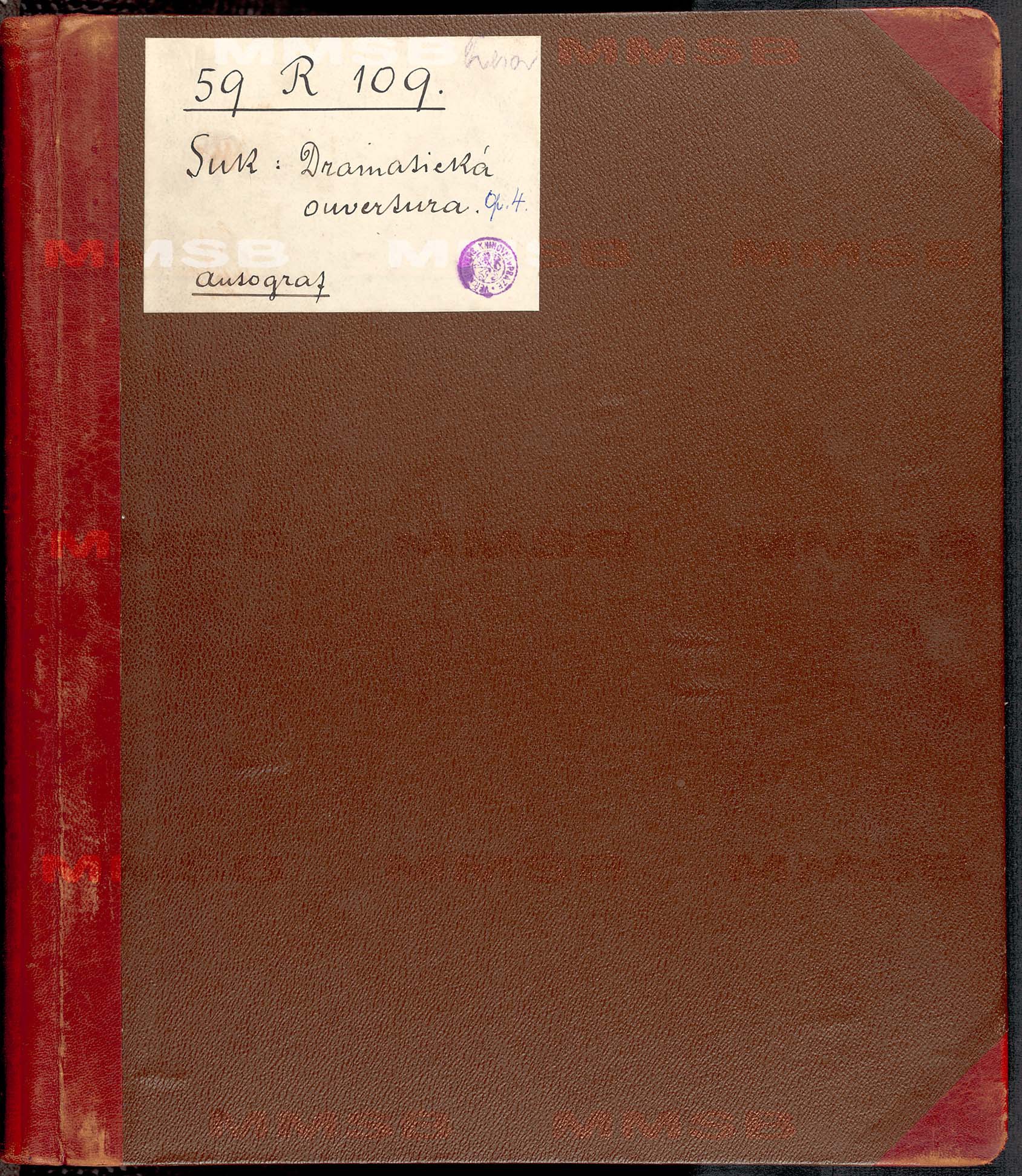
the front side of the cover with the marking of the composition by the hand of the first head of the Music Department Ladislav Vycpálek
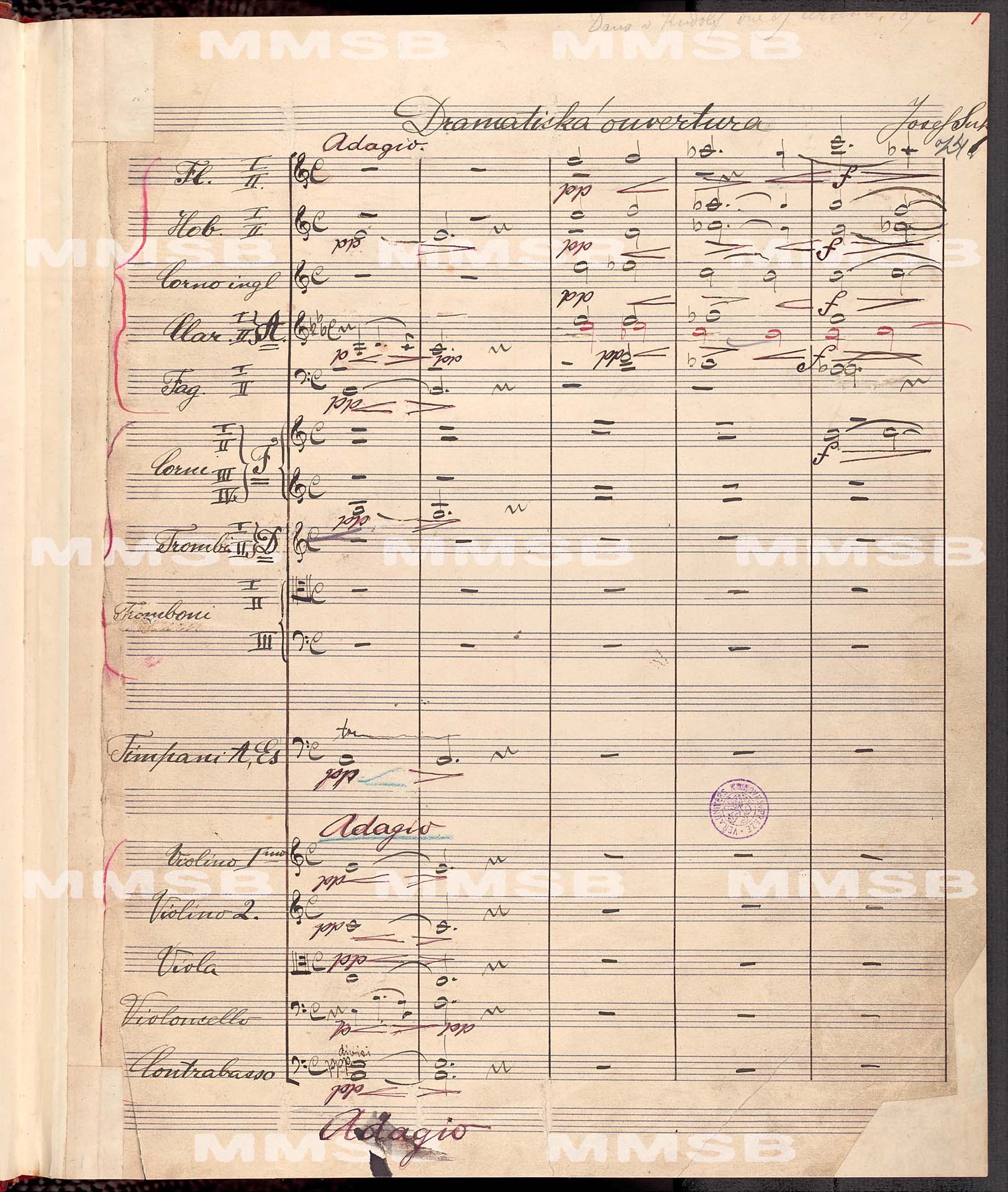
first page of the score
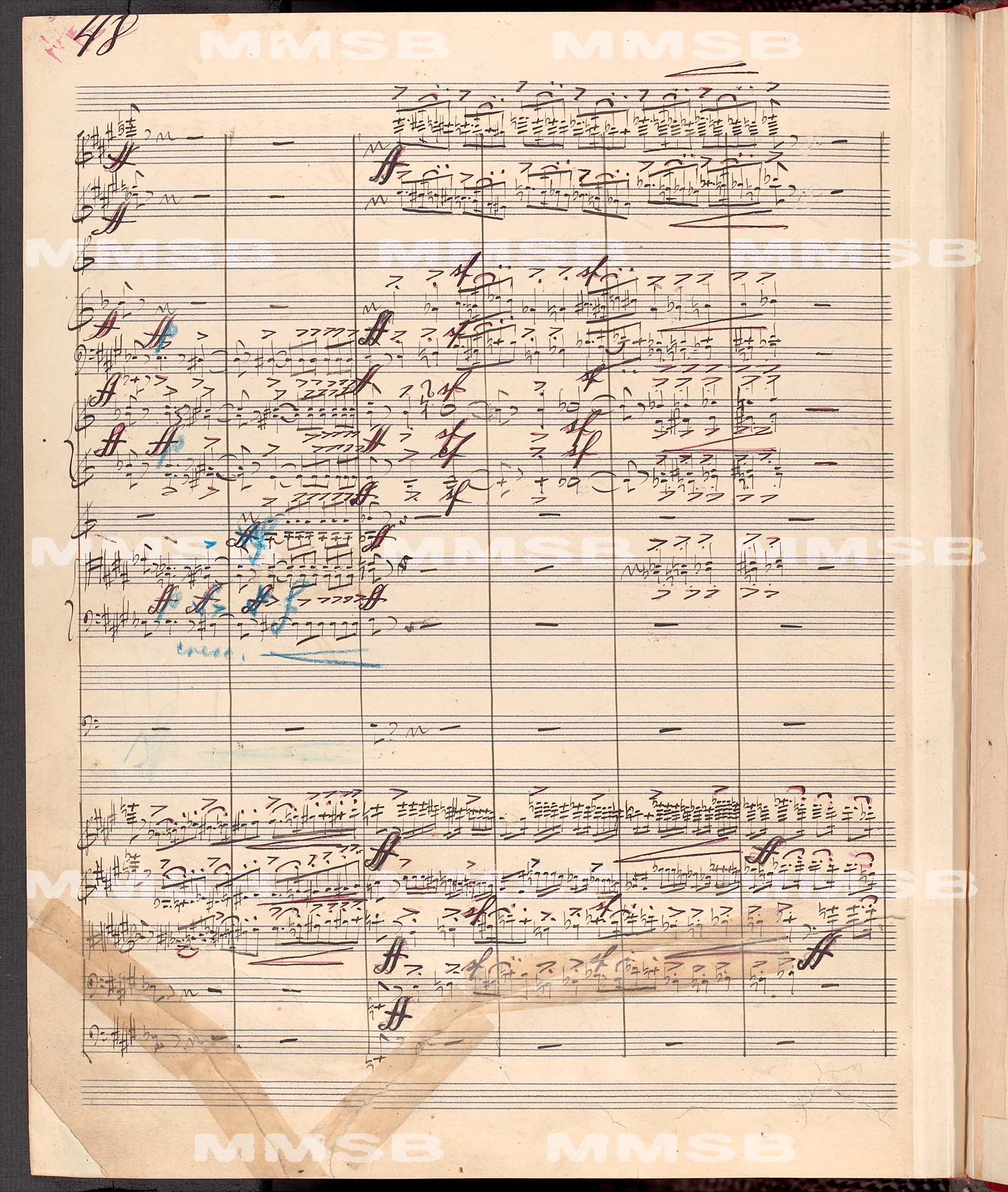
score, p. 48
MARTINŮ, Bohuslav (1890-1959)
Duo for Violin and Cello No. 1, Paris, 21 January 1927, 59 R 1956
In Bohuslav Martinů's rich chamber music output, two pieces for violin and cello were composed with a large time gap of thirty years. Martinů dedicated the first duo to his good friend Stanislav Novák and Mauritius Franck, who premiered it on 17 March 1927. Since the Duo was not published in print until 1928, it is likely that the artists used the manuscript presented.

title page

first page with music
VYCPÁLEK, Ladislav (1882-1969)
Blessed is the man..., cantata for choirs, solos and orchestra on psalm poetry, 1932, 59 R 2012
The autographs (continuous music sketch and drafts of texts) of the great cantata composition by the founder of the Music Department of the National Library, composer Ladislav Vycpalek, a pupil of Vítězslav Novák, not only represent preparatory material for the composition of the final score, but the composer also captured there the subsequent fate of the work. Vycpálek came up with the idea of celebrating the foreign resistance and its leader T. G. Masaryk with a large cantata drawing texts from the Book of Psalms after the end of the First World War. He succeeded in his intention about a decade later, in 1931-1933, when he adapted and rearranged the texts of the Psalms of the Bible of Kralice and composed a large work for choir, soloists and orchestra based on them.

title page of music sketch

sketch with added voices and insertion on the left page

draft of texts